
A critical CVE does not become a managed risk when a scanner detects it. It becomes managed when the right team can prove where it runs, understand whether it is reachable, deploy a fix safely, and confirm the exposure is gone. That distinction is the foundation of a vulnerability management process guide built for modern engineering organizations.
For SaaS companies, cloud-native teams, and product organizations, vulnerability management cannot operate as a monthly compliance exercise. Dependencies change with every build, infrastructure shifts through infrastructure-as-code pipelines, and internet-facing assets appear faster than traditional security inventories can track. The process must be continuous, evidence-based, and integrated with engineering work.
What a Vulnerability Management Process Must Accomplish
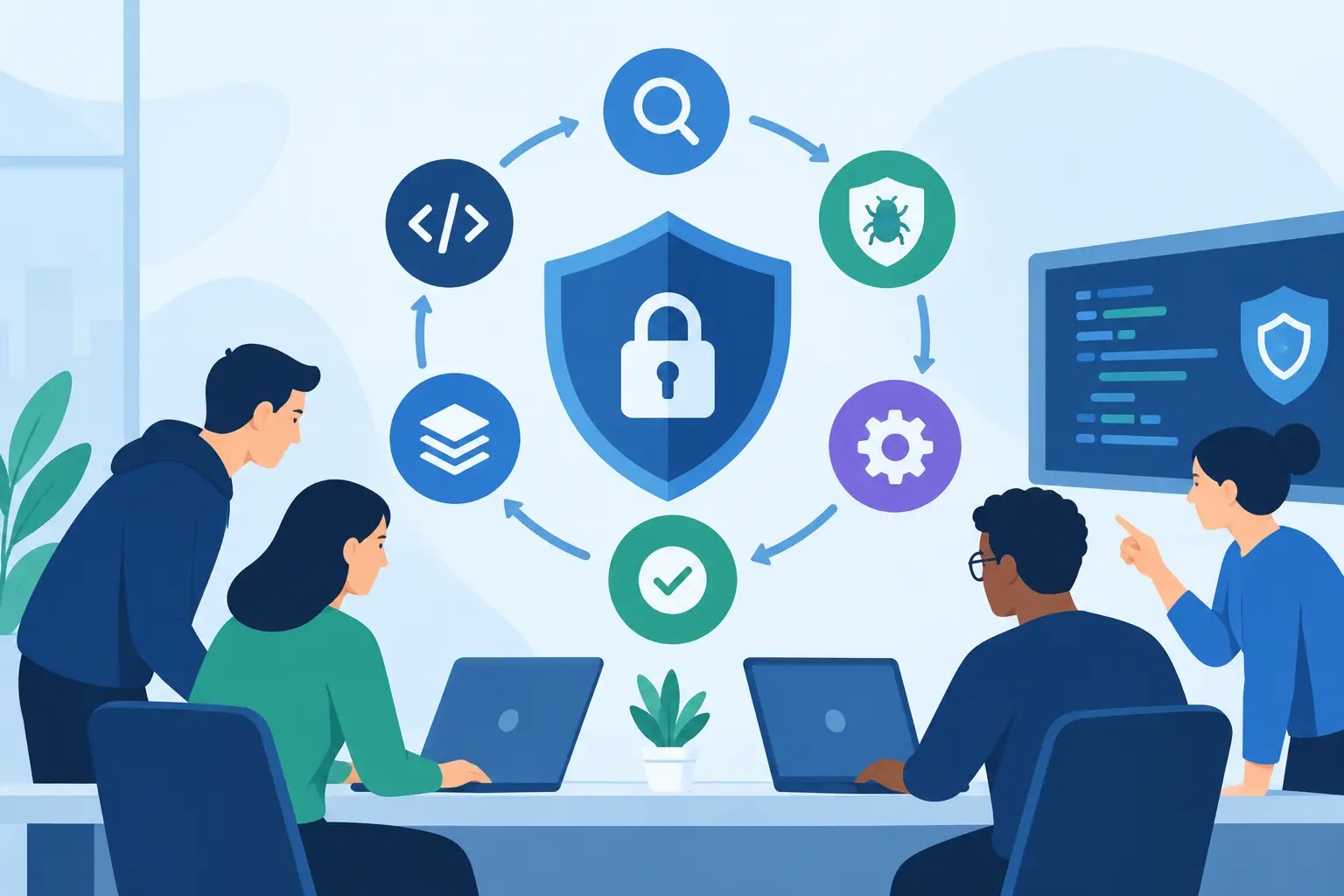
The purpose is not to reduce the number of findings in a dashboard. The purpose is to reduce the likelihood and impact of compromise while preserving delivery velocity. That requires a closed operational loop: discover assets and weaknesses, establish relevance, prioritize remediation, verify the result, and retain evidence for accountability.
A process fails when any stage is disconnected from the others. Scanning without ownership creates a backlog. Prioritization without business context sends engineers after low-value work. Patching without verification leaves false confidence. Exception handling without expiry creates permanent exposure disguised as accepted risk.
The process should cover production services, cloud accounts, endpoints, container images, CI/CD runners, source repositories, third-party packages, APIs, and externally exposed infrastructure. The precise scope depends on the organization, but undocumented exclusions are a security decision whether leadership acknowledges them or not.
1. Establish a Reliable Asset and Ownership Model
A vulnerability finding has little operational value without an asset record. Before tuning scanners or setting remediation SLAs, identify what the organization operates, who owns it, what environment it serves, and how it is exposed.
At minimum, each material asset should map to a service owner, technical owner, environment, business criticality, data classification, and internet exposure status. Cloud tags, service catalogs, repository metadata, and infrastructure-as-code labels are more durable sources than manually maintained spreadsheets. The goal is not perfect inventory on day one. The goal is a model that improves automatically as development and deployment workflows change.
Ownership needs special attention. A shared platform team may operate Kubernetes, while a product team owns the vulnerable workload and a security team defines policy. Those roles are different. Assigning every finding to the platform team only shifts the queue. Define who remediates, who approves exceptions, and who validates closure before findings arrive.
2. Collect Findings From the Right Control Points
Use multiple detection sources because each sees a different layer of risk. Software composition analysis identifies vulnerable third-party libraries. Static analysis identifies insecure code patterns. Container and host scanners assess packages and operating system exposure. Cloud security tools identify configuration flaws. Dynamic testing and external attack-surface monitoring provide evidence about running applications.
More tools do not automatically produce better coverage. Overlapping tools can generate duplicate findings with inconsistent identifiers and severity ratings. Normalize findings around a common asset identifier, package or component, vulnerability ID, detected version, environment, and source. This makes it possible to determine whether ten alerts represent ten risks or one library used across ten services.
Scan cadence should reflect change velocity and exposure. Internet-facing applications and CI/CD artifacts benefit from checks on every build or deployment. Internal systems with slower release cycles may require scheduled assessments plus event-driven scans after material changes. A quarterly scan is rarely sufficient for an actively developed service.
3. Prioritize Exploitability, Not Just Severity
A CVSS score is a useful input, not a remediation decision. A critical-rated vulnerability in an unreachable development dependency may pose less immediate risk than a medium-rated flaw in an internet-facing authentication service with known exploitation activity.
A practical prioritization model combines technical severity with exploit availability, known active exploitation, reachability, exposure, asset criticality, sensitive data access, compensating controls, and patch availability. Use threat intelligence carefully. A vulnerability does not need a public proof of concept to deserve attention, but active exploitation should move it to the front of the queue.
Reachability analysis is especially valuable for software dependencies. If a vulnerable function is not loaded or cannot be invoked by the application, remediation may be scheduled differently than for a directly exposed code path. That is not permission to ignore the finding. It is a reason to document the analysis, set a review date, and maintain visibility until the dependency is upgraded or removed.
Define remediation targets that reflect this context. For example, actively exploited issues on public production assets may require action within 24 hours, while high-severity issues in non-production systems may have a longer window. SLAs should be firm enough to drive action but realistic enough that teams do not bypass them through routine exceptions.
4. Route Work Into Engineering Workflows
Security teams should not manage remediation in a separate universe. Findings need to enter the issue tracking, service ownership, and on-call workflows engineers already use. Each ticket should contain the minimum evidence needed to act: affected asset, vulnerable component and version, exposure context, recommended fix, due date, and a direct reference to the originating evidence.
Avoid sending tickets for every instance of the same underlying problem without aggregation. One upgrade campaign for a common library may resolve hundreds of findings. Conversely, grouping findings too broadly can hide the public-facing instance that needs immediate remediation. The correct grouping level depends on how teams build, deploy, and own services.
Remediation also requires safe handling of credentials. Rotating a leaked token, replacing a cloud key, or granting a vendor temporary access should not push secrets into tickets, chat logs, or email threads. Use controlled secret-sharing channels and vault integrations. Securitae supports secure collection of credentials through encrypted links without requiring a client account, which can reduce exposure during time-sensitive remediation work.
5. Fix, Mitigate, and Verify the Actual Exposure
Patching is preferred when a supported, tested fix exists. In practice, teams may also upgrade a dependency, rebuild a container base image, disable a vulnerable feature, modify network policy, rotate credentials, or remove the asset entirely. A compensating control can be appropriate when a patch risks service stability, but it must directly reduce the relevant attack path.
Every remediation should have a verification method. Rescan the deployed artifact or environment, not merely the source branch. Confirm the fixed version reached production, validate that affected instances were replaced, and test that temporary controls are active. For remotely exploitable flaws, verification may include authenticated testing or evidence that the service is no longer reachable.
False closure is common in ephemeral environments. A team may patch the running instance while the vulnerable image remains in the registry or deployment manifest. The next autoscaling event then restores the vulnerable version. Verification should therefore inspect the source of truth: build pipelines, image registries, infrastructure definitions, and deployed runtime state.
6. Govern Exceptions as Time-Bound Risk Decisions
Some vulnerabilities cannot be remediated immediately. A vendor may not have released a patch, an upgrade may require a breaking application change, or a legacy service may be nearing retirement. These situations need an exception process, not an informal agreement in chat.
An exception should state the affected assets, risk rationale, compensating controls, accountable owner, approval authority, and expiration date. High-risk exceptions deserve review by the security leader and business owner, not just the engineering team facing the deadline. Expiration matters because risk acceptance is valid only for the circumstances considered at approval time.
Track exceptions alongside open findings. If a dashboard reports only remediated vulnerabilities, it can make the program look healthier while accepted exposures accumulate in the background.
Measure the Process Without Incentivizing Bad Behavior
Raw vulnerability counts are noisy. A growing organization with better coverage may report more findings while becoming materially safer. Measure the operational behavior that reduces risk: coverage of known assets, percentage of findings with confirmed owners, time to triage, time to remediate by risk tier, overdue exceptions, recurrence rates, and percentage of fixes verified in production.
Review trends by service, business unit, and vulnerability class. Repeated findings in base images, unsupported dependencies, or cloud configuration patterns usually indicate a control failure upstream. The right response may be a hardened golden image, dependency policy, secure template, or pipeline gate rather than another reminder to patch faster.
A mature vulnerability program gives engineers clear ownership, security teams defensible evidence, and leadership an honest view of exposure. Start by making one critical service fully visible from asset inventory through verified remediation. Once that path works, expand it deliberately. Security improves when the process makes the secure action the practical action.